Materials chosen to endure.

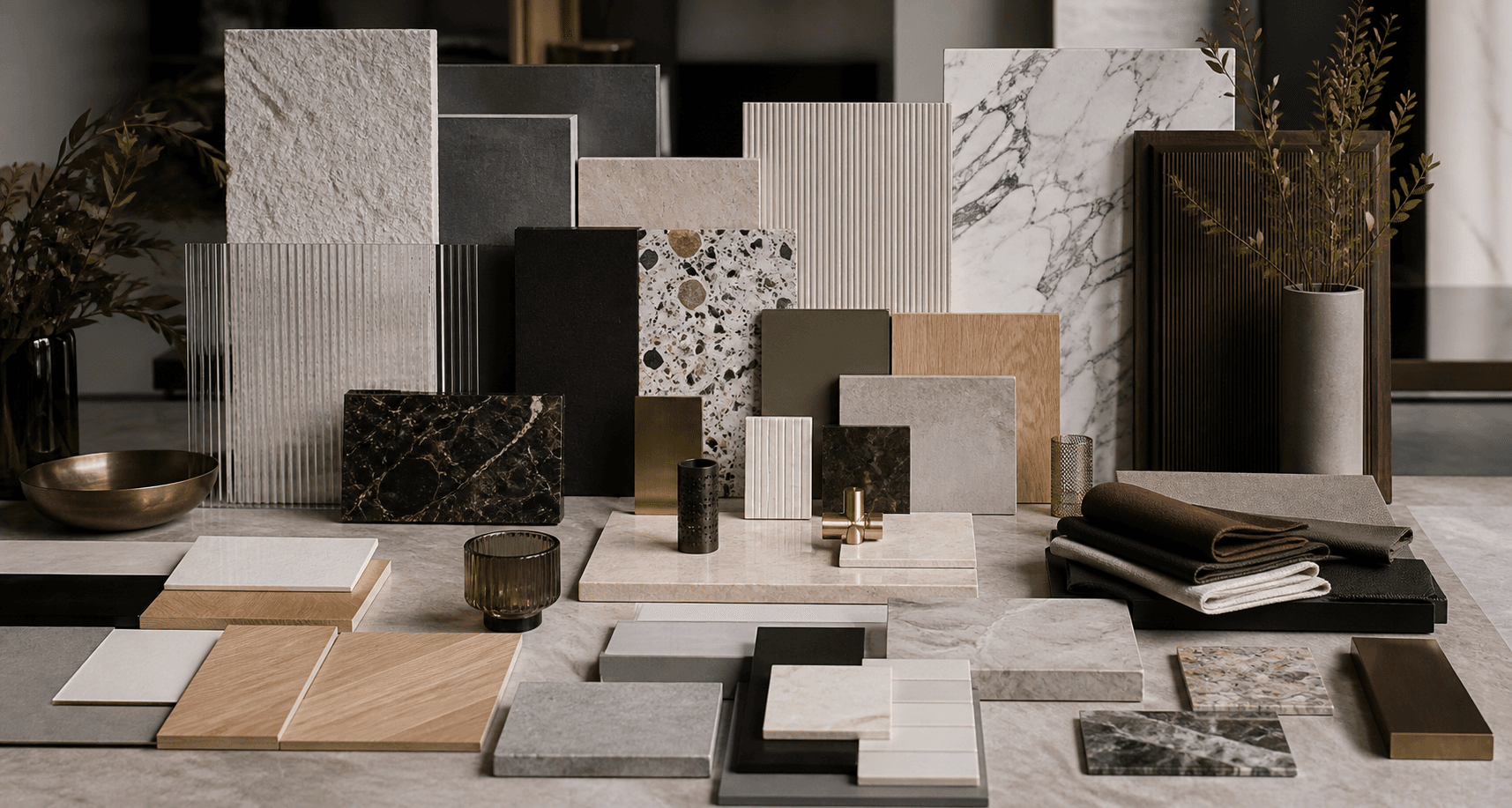
Cane & Clay builds every interior from a considered material language: natural stone, wood, metals, glass, concrete, tiles, fabrics, wall finishes, flooring and decorative details. Each selection is tested for how it looks, works and ages.

A complete palette, defined before it reaches site.

Materials are not treated as isolated samples. We compose them across rooms so flooring transitions, joinery edges, wall finishes, metal details and soft furnishings all speak the same language.

  • Every material is reviewed in morning, afternoon and artificial light before it is approved for a project.

  • Edges, joinery lines and touch points are drawn for how a home is actually lived in, not just photographed.

  • Tone, grain and reflectivity are composed together so adjoining spaces read as one considered language.

  • Sealing, finishing and care requirements are agreed upfront so the material intent holds for years, not months.

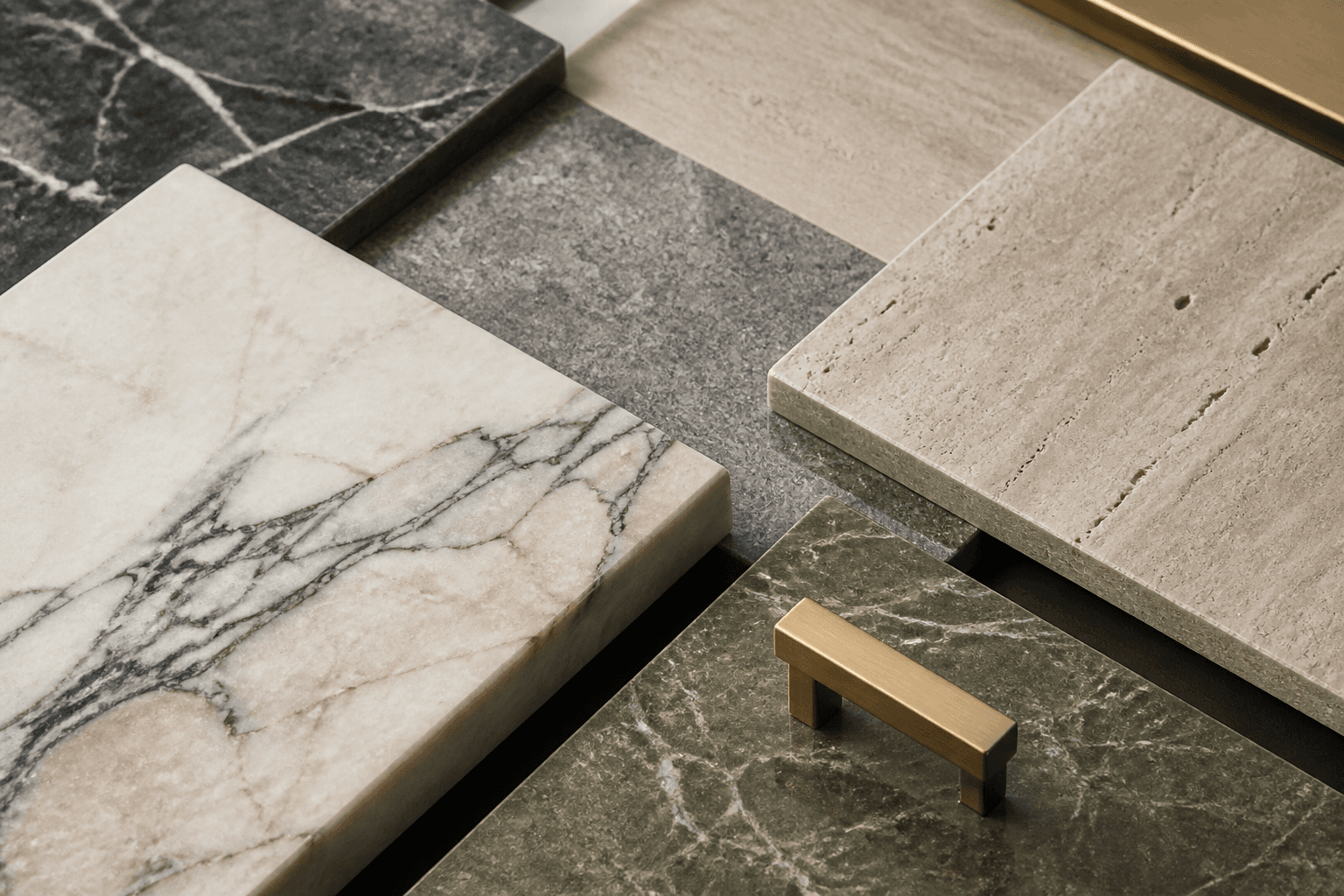
Layered marble, granite, travertine and limestone slabs with a refined metal detail

Natural Stone

Marble, granite, travertine, limestone

Marble, granite, travertine and limestone are selected for tone, movement, durability and the quiet permanence they bring to interior architecture.

  • Marble
  • Granite
  • Travertine
  • Limestone

Best Used For

  • Feature flooring
  • Countertops
  • Wall cladding
  • Bathrooms

Material Notes

  • Porous stones are sealed and maintenance expectations are agreed before installation.
  • Book-matched slabs are reserved for walls, counters and moments where veining should read as art.
  • Honed and leathered finishes are used when a softer, less reflective surface is needed.
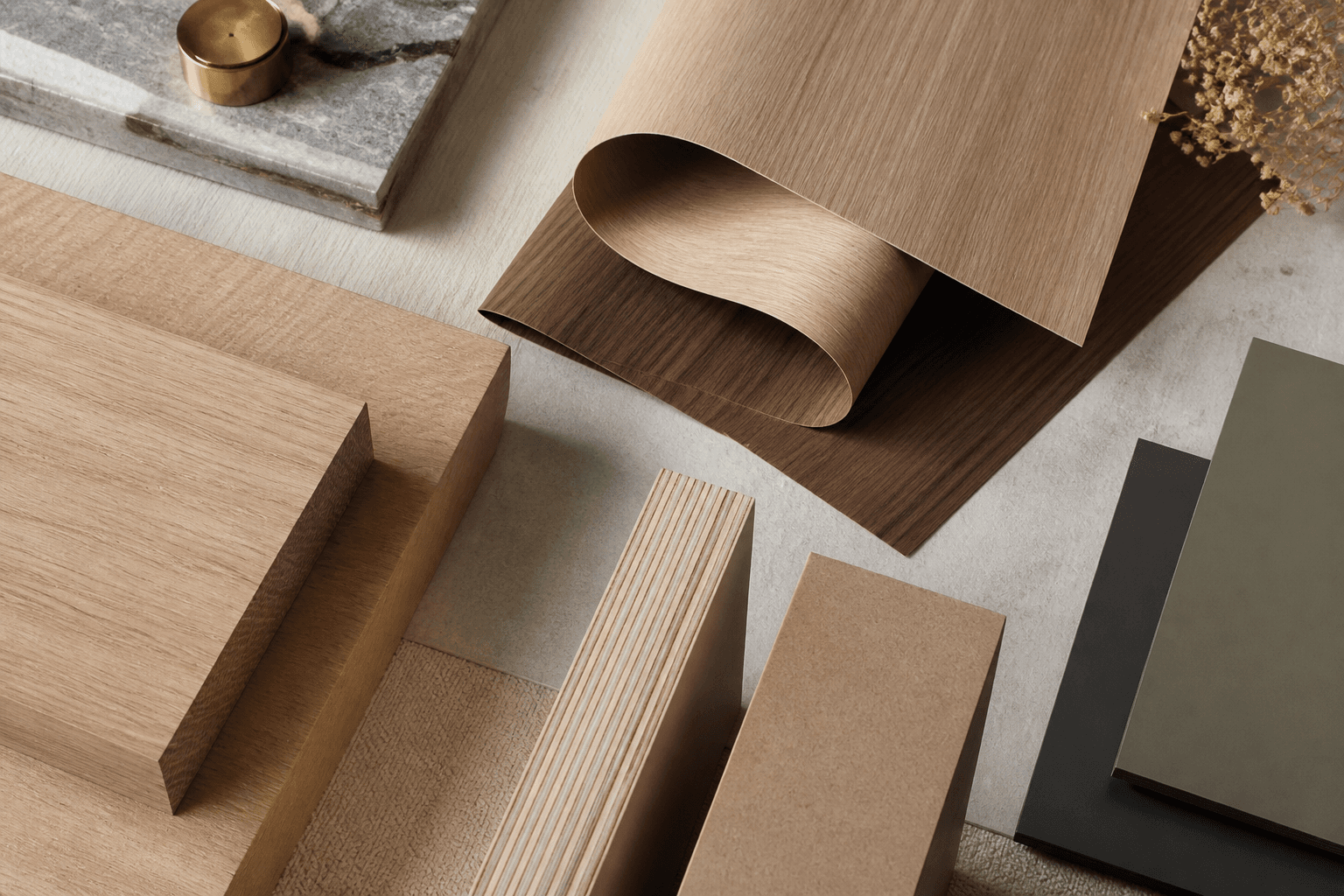
Solid wood, veneer sheets, plywood edge grain, MDF and laminate samples arranged together

Wood

Solid, veneer, plywood, MDF, laminates

Solid wood, veneer, plywood, MDF and laminates give structure, warmth and precision across joinery, panels, furniture and everyday surfaces.

  • Solid Wood
  • Veneer
  • Plywood
  • Laminates

Best Used For

  • Joinery
  • Wall panelling
  • Furniture
  • Ceilings

Material Notes

  • Solid wood is used where movement can be detailed properly; engineered substrates keep large surfaces stable.
  • Veneers and laminates are matched for grain direction, edge treatment and long-term durability.
  • Finishes are sampled under project lighting so warmth and sheen are judged in context.
Brushed stainless steel, brass, aluminium, copper and blackened steel samples arranged as architectural hardware

Metals

Steel, brass, aluminium, copper

Stainless steel, brass, aluminium, copper and blackened steel add structure, contrast and a level of detail that holds up beautifully over time.

  • Stainless Steel
  • Brass
  • Aluminium
  • Blackened Steel

Best Used For

  • Hardware
  • Stair details
  • Furniture frames
  • Lighting

Material Notes

  • Brass, copper and blackened steel are specified with patina expectations in mind.
  • Touch points are protected with finishes that suit frequency of use and cleaning routines.
  • Metal is often used sparingly to sharpen stone, wood and plaster surfaces.
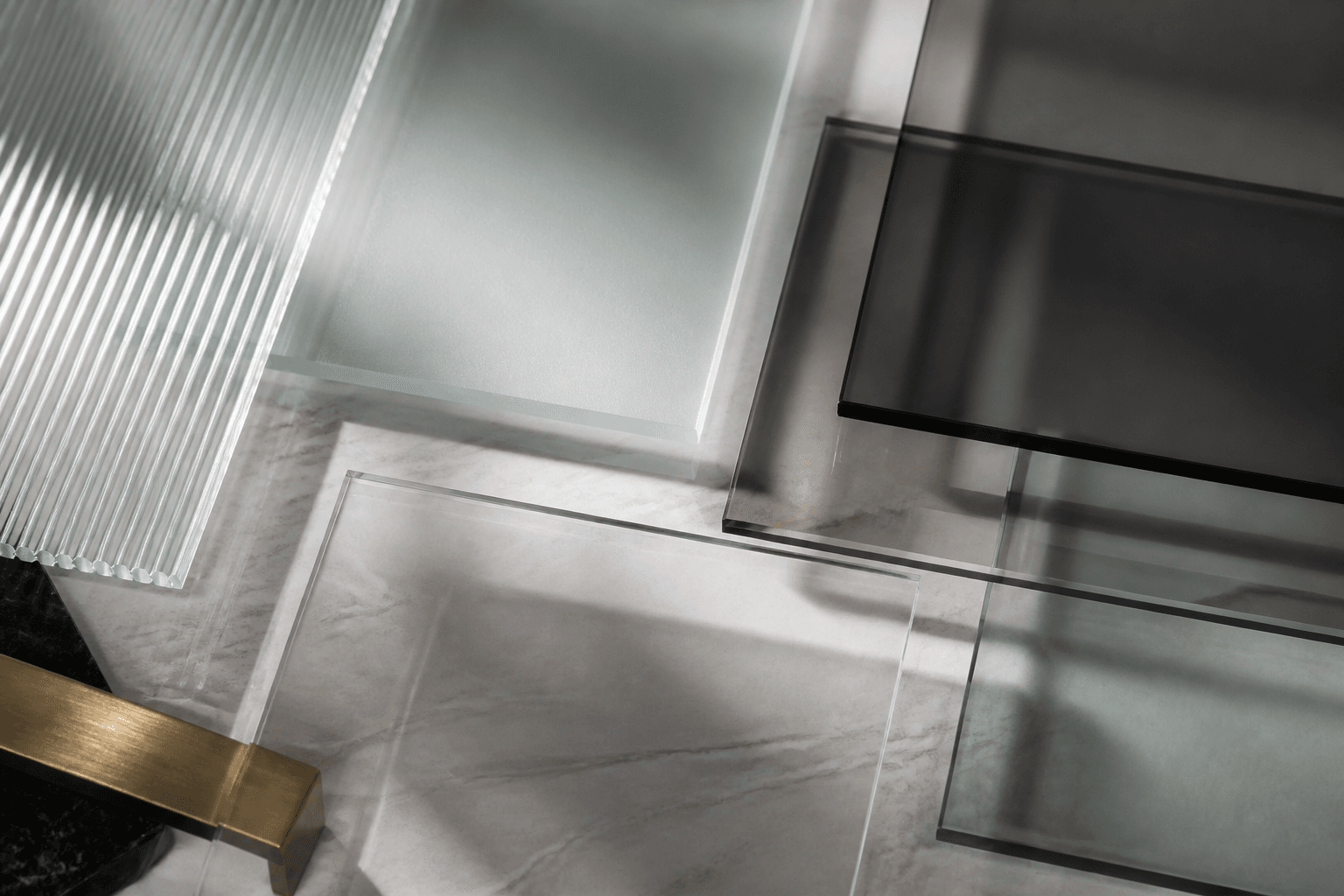
Overlapping clear, tinted, frosted, fluted and smoked glass panels on stone

Glass

Clear, tinted, frosted, fluted, smoked

Clear, tinted, frosted, fluted and smoked glass control privacy, reflection and light while keeping rooms visually open and layered.

  • Clear
  • Frosted
  • Fluted
  • Smoked

Best Used For

  • Partitions
  • Cabinet shutters
  • Shower screens
  • Balustrades

Material Notes

  • Transparency is balanced against privacy, glare and the objects visible behind the glass.
  • Fluted and smoked glass soften utility areas without fully closing them off.
  • Edges, channels and hardware are detailed as part of the composition, not as afterthoughts.
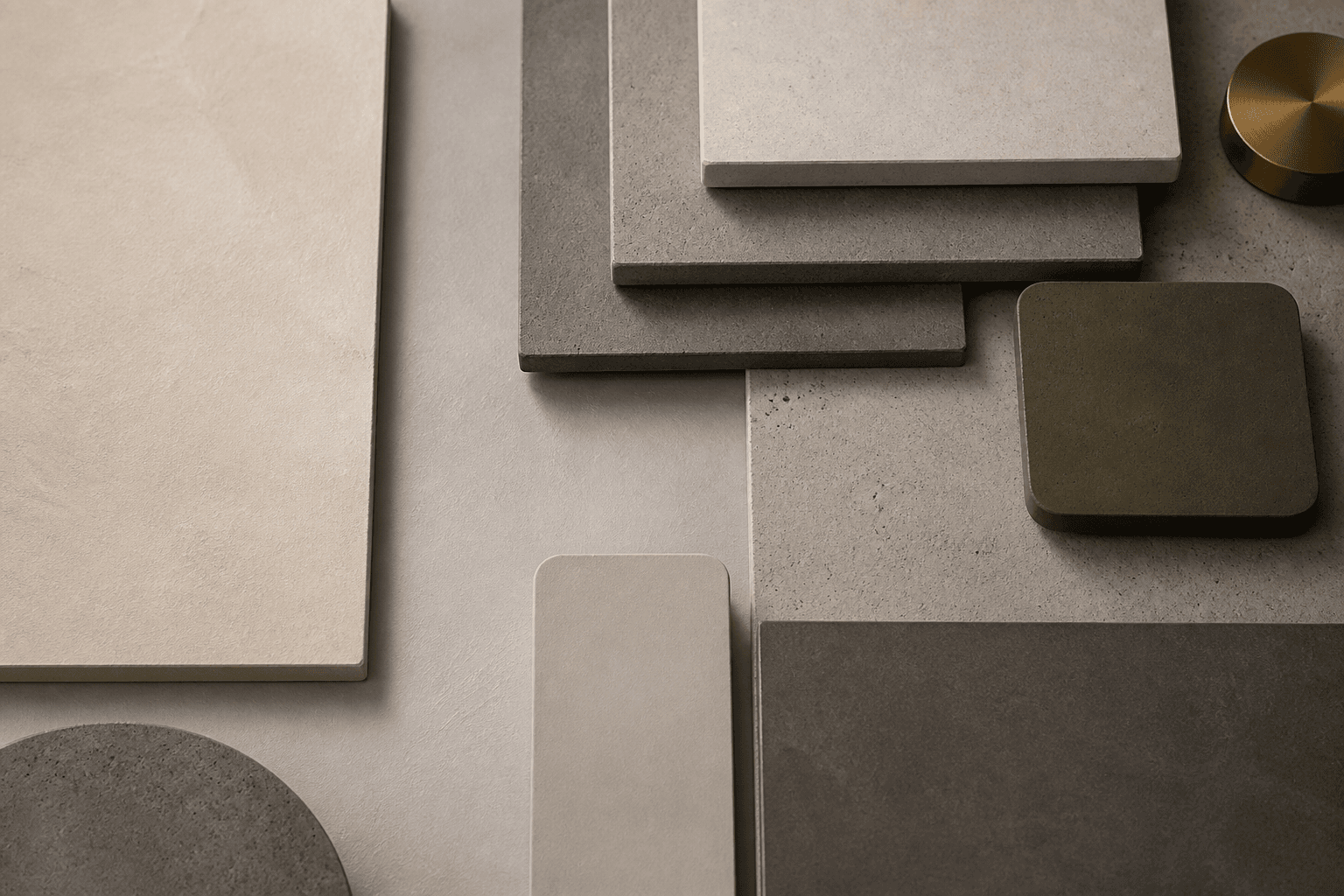
Concrete and microcement finish panels in warm grey tones with subtle trowel texture

Concrete & Microcement

Floors, walls, seamless surfaces

Concrete and microcement create calm continuous surfaces for floors, walls and monolithic details where a seamless architectural language is needed.

  • Flooring
  • Walls
  • Seamless
  • Matte

Best Used For

  • Bathrooms
  • Feature walls
  • Floors
  • Built-in counters

Material Notes

  • Substrate preparation and expansion details are treated as part of the finish specification.
  • Microcement is chosen for continuity in areas where fewer joints make the room feel calmer.
  • Tone and trowel movement are mocked up before work begins on site.
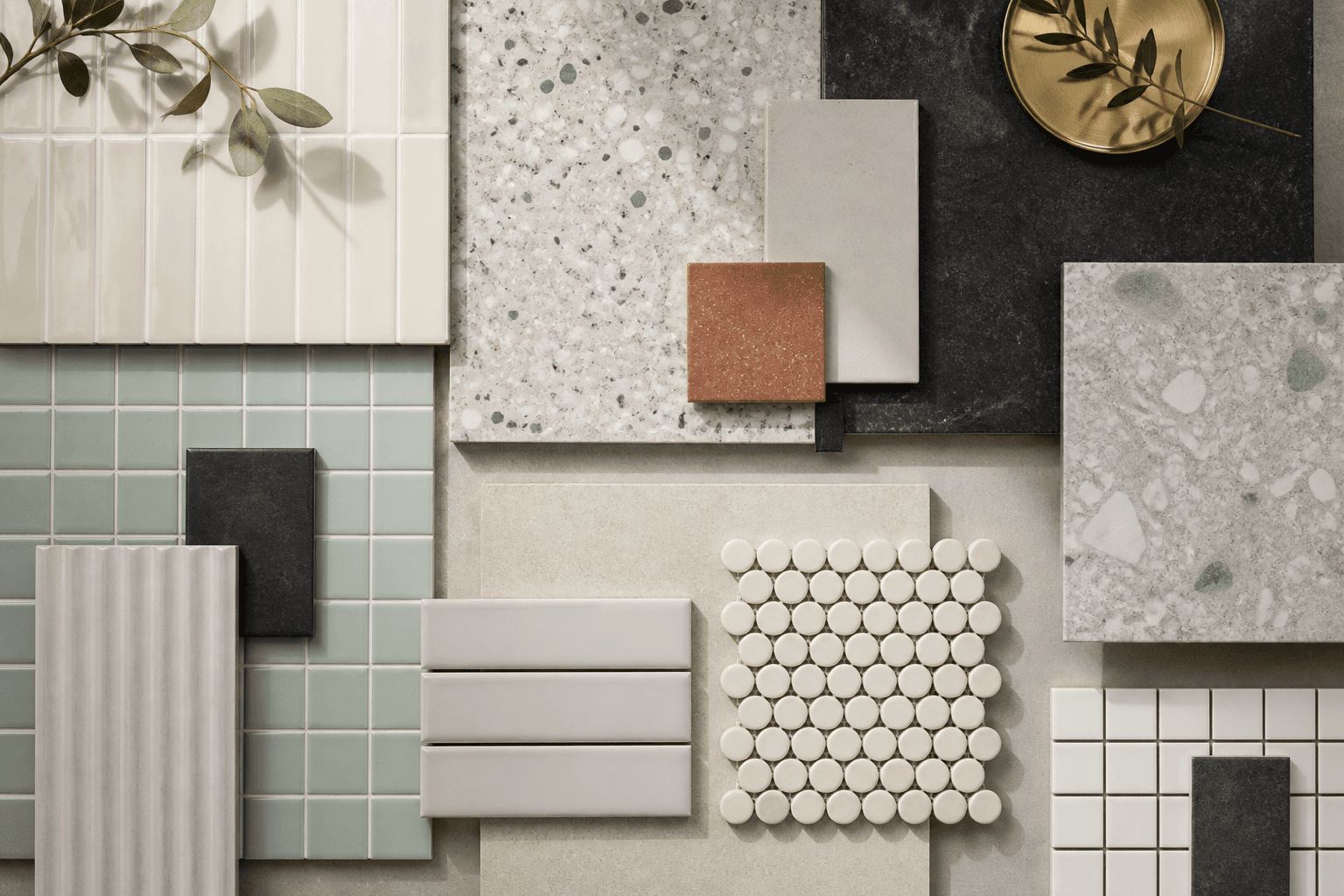
Ceramic, porcelain, terrazzo and mosaic tile samples arranged in a refined material board

Tiles

Ceramic, porcelain, terrazzo, mosaic

Ceramic, porcelain, terrazzo and mosaic tiles bring scale, rhythm and durable pattern to wet areas, floors, walls and crafted surfaces.

  • Ceramic
  • Porcelain
  • Terrazzo
  • Mosaic

Best Used For

  • Wet areas
  • Kitchen backsplashes
  • Floors
  • Outdoor transitions

Material Notes

  • Tile sizes are selected around room proportion, grout rhythm and where cuts will land.
  • Porcelain carries high-traffic areas; handmade and mosaic formats bring variation where detail matters.
  • Grout color is sampled as visibly as the tile itself because it changes the entire read.
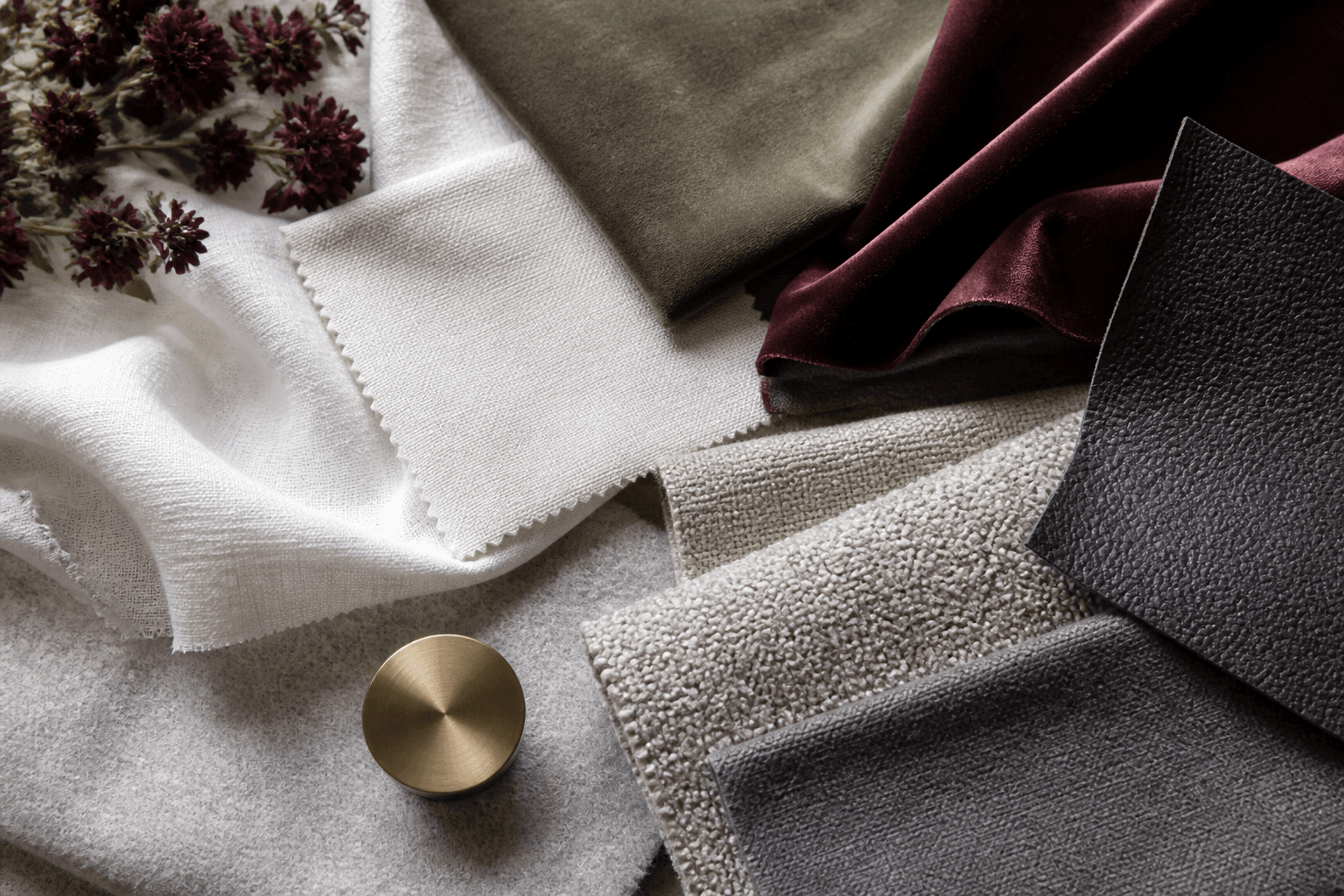
Layered linen, cotton, velvet, wool, leather and boucle fabric samples

Fabrics

Linen, cotton, velvet, wool, leather, boucle

Linen, cotton, velvet, wool, leather and boucle shape the softness of a room through upholstery, drapery, cushions and acoustic comfort.

  • Linen
  • Velvet
  • Wool
  • Leather

Best Used For

  • Upholstery
  • Drapery
  • Cushions
  • Acoustic softness

Material Notes

  • Rub count, colorfastness and cleanability are checked against how each piece will be used.
  • Natural weaves bring breathability; velvet, wool and boucle add density and acoustic comfort.
  • Leather is selected for grain, ageing behaviour and the way it will sit beside timber and metal.
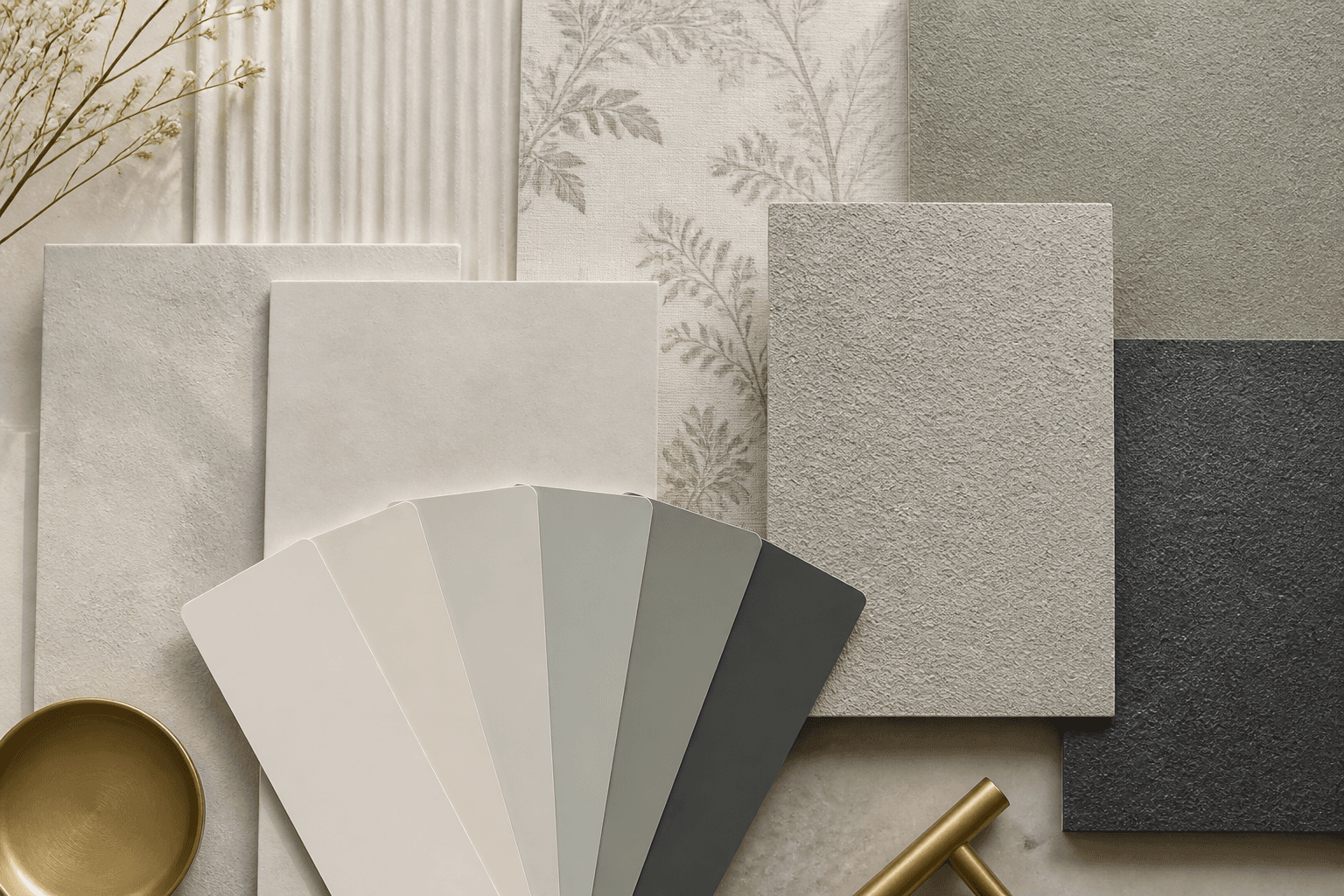
Paint cards, wallpaper and textured lime plaster wall finish samples

Wall Finishes

Paint, wallpaper, lime plaster, texture

Paint, wallpaper, lime plaster and textured coatings are developed as the quiet backdrop that gives rooms atmosphere, proportion and depth.

  • Paint
  • Wallpaper
  • Lime Plaster
  • Texture

Best Used For

  • Feature walls
  • Full-room color
  • Powder rooms
  • Textured backdrops

Material Notes

  • Paint is reviewed in morning, afternoon and artificial light before the final shade is approved.
  • Lime plaster and texture are used where depth should come from surface movement rather than decoration.
  • Wallpaper is aligned with joinery, art and furniture so pattern breaks feel deliberate.
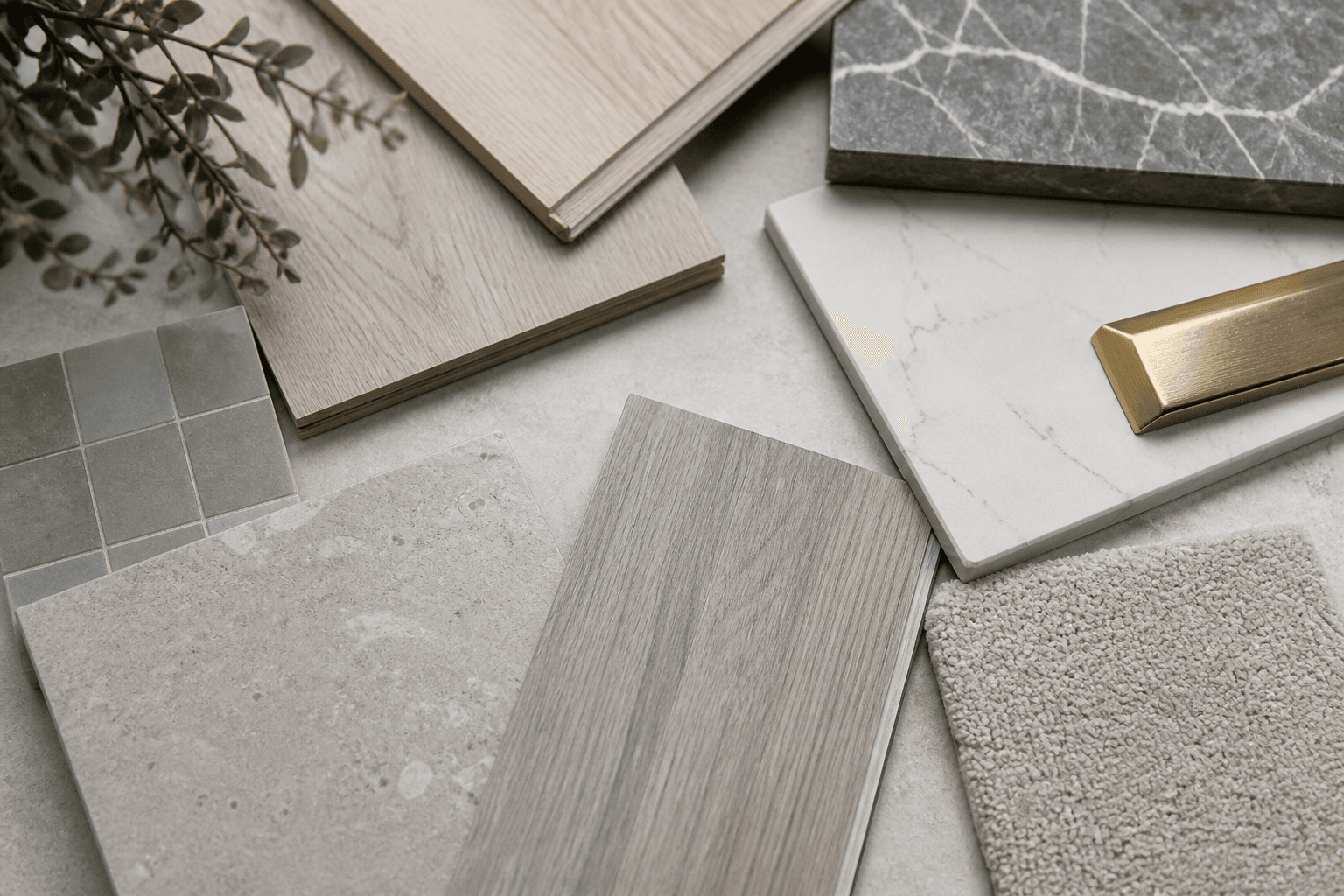
Wood, stone, tile, vinyl and carpet flooring samples arranged on a studio surface

Flooring

Wood, stone, tiles, vinyl, carpet

Wood, stone, tiles, vinyl and carpet are chosen for movement, acoustics, maintenance and the way each room should feel underfoot.

  • Wood
  • Stone
  • Tiles
  • Carpet

Best Used For

  • Living areas
  • Bedrooms
  • Wet zones
  • High-traffic circulation

Material Notes

  • Flooring is selected for continuity between rooms as much as for the character of each material.
  • Acoustics, grip, maintenance and threshold details are reviewed before visual decisions are locked.
  • Transitions are planned early so different materials meet cleanly at doors, stairs and edges.
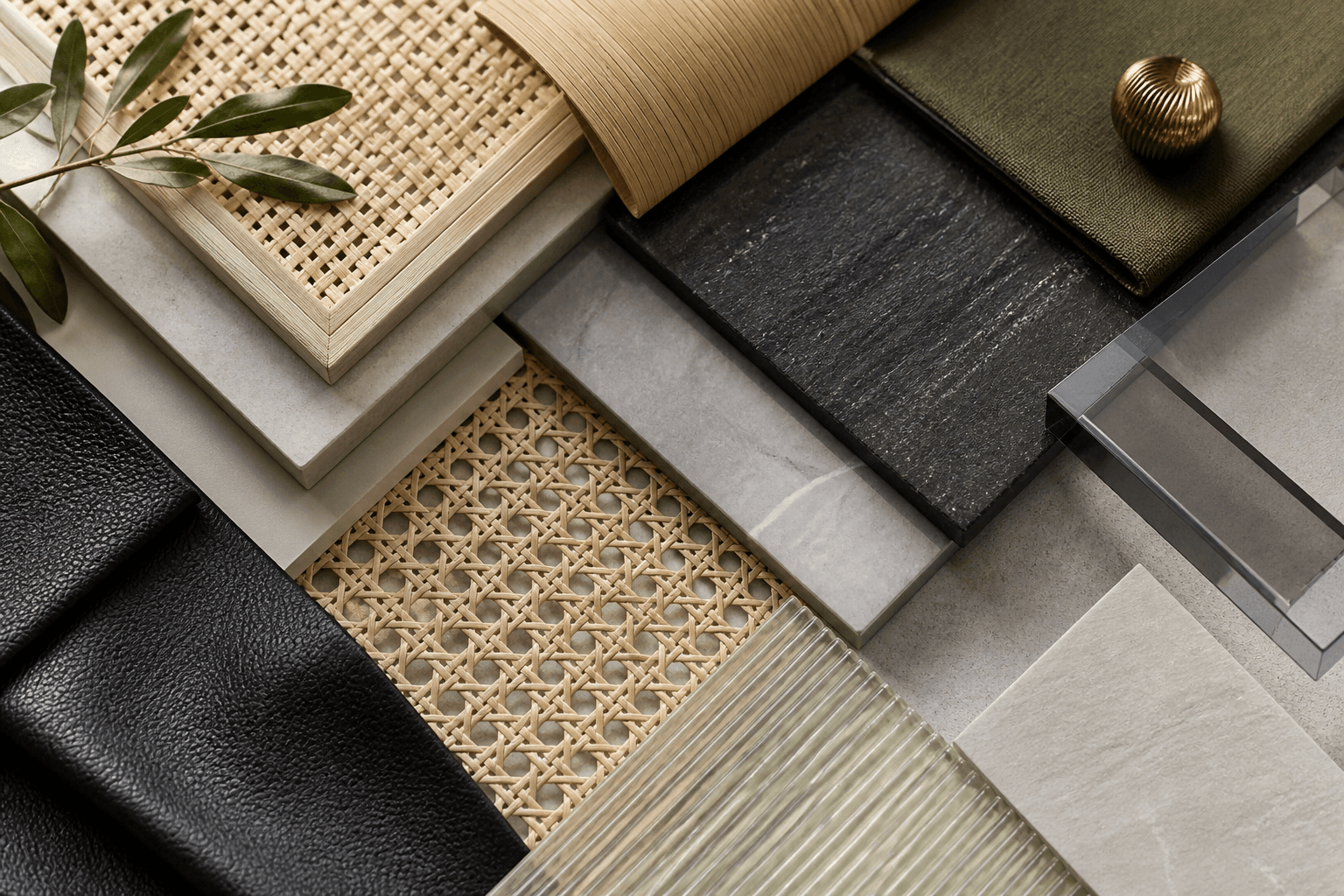
Decorative cane, rattan, bamboo, leather and acrylic material samples

Decorative Materials

Cane, rattan, bamboo, leather, acrylic

Cane, rattan, bamboo, leather and acrylic are used as considered accents, adding tactility and character without narrowing the studio to one material language.

  • Rattan
  • Bamboo
  • Leather
  • Acrylic

Best Used For

  • Screens
  • Accent panels
  • Loose furniture
  • Decorative inserts

Material Notes

  • Cane, rattan and bamboo are used where texture and lightness can soften built forms.
  • Acrylic brings clarity or color when a lighter visual weight is needed.
  • Decorative materials are balanced with quieter surfaces so the room remains composed.

How material decisions become built details.

  1. 01

    Read the room

    Light, proportion, climate, usage and maintenance shape the first material direction.

  2. 02

    Build the palette

    Samples are layered together so tone, grain, reflectivity and touch are judged as one system.

  3. 03

    Resolve the detail

    Edges, joints, thresholds and fabrication tolerances are drawn before site work begins.

  4. 04

    Protect the finish

    Installation, sealing, care and handover notes keep the material intent intact after move-in.

Bring the palette into the project conversation.

Whether the project begins with one room or a complete residence, the material direction can be developed early so every drawing, quote and site decision is anchored.

Begin a Project